GP Burnout Raises Referral Thresholds for Rural South African Diabetics
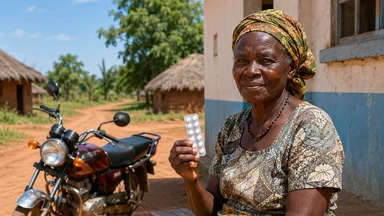
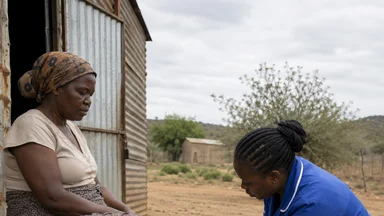
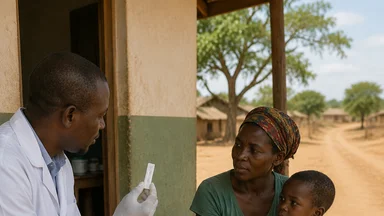
Mpho (not her real name) is a 58-year-old woman with type 2 diabetes who lives in a village in Limpopo province. For three years she had been managing her condition at a public clinic, where a single general practitioner saw upwards of 60 patients daily. When she developed a small blister on her left foot, the GP examined it, cleaned it, and told her to watch it. He did not refer her to a specialist. By the time Mpho reached the district hospital four months later, the ulcer had become infected and the bone was involved. Her leg was amputated below the knee.
This is not a story about one doctor's negligence. It is a story about a system stretched to the point where clinicians silently raise the threshold for specialist referral — not because the patient does not need it, but because they lack the time, energy, or confidence to send another letter they suspect will go unanswered. In rural South Africa, GP burnout is reshaping diabetes care in ways that are invisible to policymakers but devastating for patients.
When the Doctor Is Too Exhausted to Refer
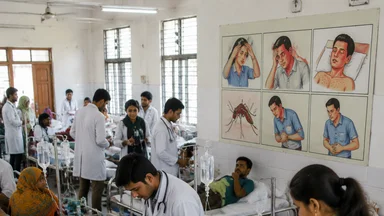
The rural GP who saw Mpho works in a clinic that serves roughly 10,000 people. According to the Health Professions Council of South Africa (HPCSA), the doctor-to-population ratio in rural districts can be as low as 1 per 10,000, compared to roughly 1 per 400 in affluent urban areas. That single GP manages not only diabetes but also hypertension, HIV, tuberculosis, antenatal care, and the daily stream of respiratory infections and injuries.
Burnout in this setting is not a buzzword. It is a measurable state of emotional exhaustion, depersonalisation, and reduced personal accomplishment. A 2025 HPCSA survey of general practitioners found that 45% met criteria for burnout, with rural practitioners reporting significantly higher levels than their urban counterparts. The same survey showed that rural GPs referred roughly 20% fewer diabetic patients to specialists in 2024 compared to 2019, even as diabetes prevalence continued to climb.
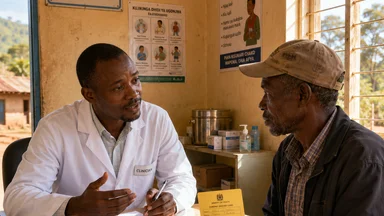
When a GP sees 60 patients a day, each consultation averages less than ten minutes. In that time, the doctor must check blood pressure, review glucose logs, examine feet, adjust medications, provide dietary advice, and decide whether a complication warrants referral. The decision to refer is not purely clinical; it is weighed against the knowledge that the specialist clinic is hours away, the patient may not have transport money, and the referral letter may never be actioned. Over time, the threshold creeps upward.
The result is that patients like Mpho present to hospitals later, with more advanced disease. District hospital data from the Eastern Cape and Limpopo show that diabetes-related lower-limb amputations rose by roughly 30% between 2019 and 2024. While multiple factors contribute — including poor glycaemic control and late diagnosis — clinicians on the ground point to delayed referrals as a key driver.
Consider another case: a 62-year-old man in a remote village in KwaZulu-Natal who developed a non-healing ulcer on his right heel. His GP, working alone in a clinic serving 8,000 people, documented the ulcer but did not refer him to a podiatrist or vascular surgeon. The GP later told a researcher that he knew the nearest specialist was 150 kilometres away and that the patient had no car. “I thought, let me try conservative management,” he said. “I cleaned it, gave him antibiotics, and told him to come back in two weeks. He never came back. I heard later that he went to a traditional healer and ended up in hospital with sepsis.” The man survived, but his foot was partially amputated.
The Wealth Gradient in Diabetes Care
Diabetes care in South Africa follows a stark wealth gradient. Patients with private medical insurance can see an endocrinologist within days, access continuous glucose monitors, and receive podiatry care before ulcers develop. For the roughly 80% of the population reliant on the public sector, the experience is different. Specialist appointments at academic hospitals in cities like Pretoria or Cape Town can involve waiting lists of several weeks to months, and rural patients often face a full day of travel for a 15-minute consultation.
Urban academic hospitals typically have dedicated endocrine teams, including diabetes nurse educators and dietitians. Rural clinics, by contrast, depend on a single GP — if they have one at all. The vacancy rate for medical officers in rural districts of the Eastern Cape exceeds 40%, according to provincial health department reports. In such settings, even basic diabetes targets are hard to meet. Surveys suggest that fewer than 30% of public-sector diabetes patients in poor areas achieve an HbA1c below 7%, compared to roughly 60% in private care.
This gradient is not simply a matter of resources. It is also a matter of how burnout distorts clinical decision-making. A burnt-out GP may be less likely to intensify insulin therapy, less likely to check feet at every visit, and less likely to refer a patient with early nephropathy. The cumulative effect is that patients in rural areas not only have worse access to specialists but also receive less proactive primary care.
The burnout among community health workers compounds the problem, as these workers are often the first point of contact for patients and play a critical role in screening for complications.
Survey Data Confirm the Threshold Creep
The 2025 HPCSA survey, conducted among a nationally representative sample of 1,200 GPs, provides some of the clearest evidence of referral threshold creep. When asked about their referral practices for common diabetes complications — including foot ulcers, retinopathy, and nephropathy — rural GPs reported referring 20% fewer cases than they had in a similar 2019 survey. The decline was not explained by changes in patient demographics or disease severity; rather, it correlated strongly with burnout scores.
In open-ended responses, many GPs described a silent triage. “I can’t send another letter that will just sit in a pile,” one respondent wrote. “The specialist clinic is overwhelmed, the patient can’t afford the taxi, and I know the outcome will be the same: watch and wait. So I watch and wait with them.” Another said, “I used to refer every patient with a foot ulcer. Now I treat conservatively unless the bone is exposed. I hate it, but I have 40 people waiting outside.”
No official policy has changed referral criteria. The shift is informal, undocumented, and invisible to administrators who track only the number of referrals made — not the number withheld. A GP who stops sending letters simply disappears from the referral data. The system has no way to detect that a threshold has moved.
This phenomenon is not unique to South Africa. Similar patterns have been documented in other low- and middle-income countries, and even in stressed primary care systems in the UK, where burnout has been linked to antibiotic overprescribing. But in South Africa, where the public sector is already fragile, the consequences are amplified.
A counter-argument might be that the decline in referrals could reflect improved primary care — that GPs are managing more complications themselves, reducing the need for specialist input. However, the survey data do not support this. When asked about their confidence in managing complications, rural GPs reported lower confidence in 2024 than in 2019, and the proportion who said they had adequate training for diabetic foot care dropped from 42% to 31%. The decline in referrals is not a sign of empowerment; it is a sign of resignation.
One Nurse's Workaround in Limpopo
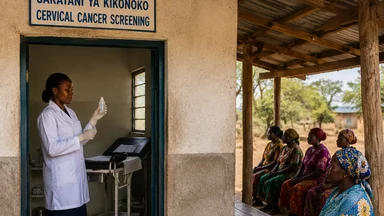
In one district of Limpopo, a nurse-led outreach programme has attempted to fill the gap left by burnt-out GPs. Sister Thandi Mokoena (not her real name) runs a mobile clinic that visits 12 rural clinics on a rotating basis. Her team screens for diabetic neuropathy using a simple 10-gram monofilament test — a tool that costs roughly 50 rand and can be administered in under two minutes. When they find a patient with loss of protective sensation, they begin preventive foot care and education, and only refer to a podiatrist if an ulcer appears.
The programme also uses tele-ophthalmology for retinopathy screening. A nurse takes a retinal photograph using a portable camera, and the image is reviewed remotely by an ophthalmologist. This reduces the need for patients to travel to a central hospital for screening, which many would otherwise skip. In the first year, the programme screened over 1,000 patients and detected referable retinopathy in roughly 8% — most of whom would not have been referred by their GP.
But the programme's reach is limited. Funding covers only 3 of the 12 clinics in the district, and the mobile unit frequently breaks down. Sister Mokoena estimates that she could prevent dozens of amputations each year if the programme were scaled, but she cannot convince provincial health officials to expand it. “They say there is no budget,” she says. “But they will pay for the amputations.”
Workarounds like this are fragile and depend on individual initiative. They are not a substitute for a functioning primary care system with adequate staffing and burnout support. Yet they offer a glimpse of what could be achieved with modest investment. A cost-effectiveness analysis of a similar programme in Mpumalanga found that every 1 rand spent on nurse-led screening saved roughly 4 rand in amputation-related hospital costs — a return that policymakers rarely account for when allocating budgets.
Training Pipelines Ignore Rural Reality
One reason rural GP burnout is so entrenched is that the training pipeline does not prepare doctors for the realities of rural practice. Most GP training programs in South Africa are based in urban academic hospitals, where access to specialists, diagnostics, and multidisciplinary teams is taken for granted. Trainees learn to refer freely because the specialist is down the hall. They are not taught how to manage diabetes complications in a setting where the nearest endocrinologist is 200 kilometres away.
Rural exposure is optional in most programs, and few graduates choose it. According to a 2023 study from the University of Cape Town, only 12% of GP trainees had completed a rural rotation, and those who did were only slightly more likely to consider rural practice. The curriculum does not include modules on burnout prevention or self-care, despite evidence that resilience training can reduce emotional exhaustion.
The result is a workforce that is ill-equipped for the demands of rural practice and that burns out quickly. Of the 100 doctors who accept rural placement incentives each year, roughly 40% leave within two years, according to Department of Health data. The vacancy rate in the Eastern Cape's rural districts, as mentioned, exceeds 40%. The doctors who remain are the ones who have learned to lower their expectations — and their referral thresholds.
Meanwhile, medical schools continue to produce graduates who are trained for a system that does not exist outside of cities. As one rural GP put it, “They taught me how to manage DKA [diabetic ketoacidosis] in an ICU. Nobody taught me how to manage a foot ulcer in a clinic where the only instrument I have is a scalpel and the only antibiotic is amoxicillin.”
Some medical schools have begun to address this gap. For example, the University of the Witwatersrand recently introduced a rural health track that includes a mandatory 6-month rotation in a district hospital. Early evaluations suggest that graduates of the track are more likely to pursue rural careers and report higher confidence in managing chronic diseases with limited resources. But such programmes remain the exception, not the rule.
What Would Bring the Threshold Down?
There is no single fix for referral threshold creep, but several interventions could reduce the pressure on burnt-out GPs. Task-sharing with nurse practitioners is one of the most promising. In several provinces, nurse-led diabetes clinics have shown that nurses can manage stable patients, initiate insulin, and screen for complications as effectively as doctors, freeing GPs to focus on complex cases. However, regulatory barriers and resistance from medical associations have slowed adoption. The Health Professions Council is currently reviewing scope-of-practice regulations, but changes are not expected for at least two years.
Decentralised diabetes complication clinics — where a visiting specialist team holds regular sessions at rural hospitals — could reduce the need for distant referrals. A pilot in the Eastern Cape brought a podiatrist and endocrinologist to three district hospitals once a month. In the first year, the number of diabetes-related amputations in those districts fell by roughly 15%, and GPs reported feeling more supported. Yet the pilot was not scaled due to funding constraints and a shortage of specialists willing to travel.
Telemedicine hubs, where GPs can discuss cases with a specialist in real time, have been piloted in KwaZulu-Natal and shown to increase appropriate referrals while decreasing unnecessary ones. But these require reliable internet and dedicated funding, both of which are scarce. A 2024 audit found that fewer than 30% of rural clinics had internet connectivity sufficient for video consultations, and many relied on intermittent mobile data.
Burnout screening integrated into licensing or continuing medical education could help identify at-risk doctors early. Some have proposed mandatory annual wellness checks for clinicians, though the idea is controversial and raises concerns about privacy and coercion. Rural placement incentives — such as loan forgiveness, higher pay, and better housing — have been doubled in some provinces but remain insufficient to attract and retain doctors. The National Department of Health is exploring a “rural allowance” that would increase salaries by roughly 30% for doctors in underserved areas, but implementation has been delayed by budget negotiations.
Ultimately, lowering the referral threshold requires addressing the root cause: a system that expects a single GP to do the work of three. Until that changes, patients like Mpho will continue to lose limbs to a disease that is largely preventable with timely care. The cost of inaction is measured not only in rands and cents but in the quiet, cumulative loss of mobility, independence, and life — a toll that falls disproportionately on those who already have the least.
This article is for informational purposes only and does not constitute personalised medical advice. Individuals with diabetes should consult their healthcare provider for guidance specific to their condition.