Tuberculosis Diagnosis Delays Six Weeks as Rural Uganda Faces GeneXpert Cartridge Shortages
In rural Uganda, John Ochieng, a 45-year-old farmer in Busia District, with a persistent cough visits clinic after clinic, each time told to wait. The sputum sample he provides sits in a jar for weeks because the machine that could test it—a GeneXpert analyzer—has no cartridges. Across the country's eastern and northern districts, the same scene plays out: tuberculosis diagnosis, which the World Health Organization recommends be confirmed within hours using molecular testing, takes six weeks or longer. By the time the result arrives, the farmer may have infected his family, lost his savings, and developed resistance to first-line antibiotics.
Diagnosis Delays Worsen as GeneXpert Cartridges Run Dry
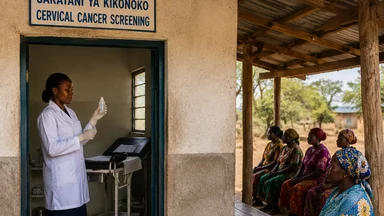
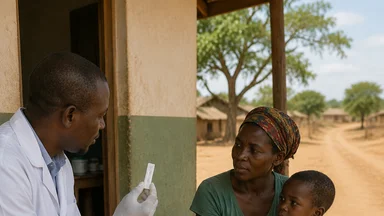
Esther Nakato, a 34-year-old mother of three in Tororo District, started coughing in June 2024. She went to her local health center, where a nurse took a sputum sample and told her to return in two weeks. When she returned, the sample had not been tested. The health center's GeneXpert machine had run out of cartridges, and no one knew when the next shipment would arrive. She was referred to the district hospital, 40 kilometers away, where the machine was also idle.
Nakato's experience is not unusual. According to a 2024 report from Uganda's National TB Program, roughly 40% of health facilities with GeneXpert machines experienced stockouts of cartridges lasting more than a week in the previous quarter. In some districts, the stockout rate exceeded 60%. Patients cycle through clinics, each time providing a new sample, while the cough persists and they lose weight.
The six-week wait is a best estimate from interviews with clinicians in three districts. Some patients wait two months or longer. During that time, they continue to cough in crowded homes, shared taxis, and marketplaces. The bacteria that cause tuberculosis—Mycobacterium tuberculosis—spread through the air. Every week of delay increases the number of people exposed.
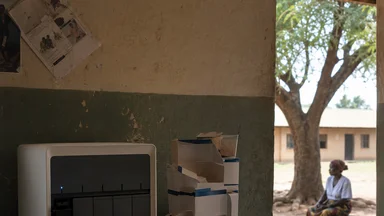
The WHO recommends that all persons with symptoms of tuberculosis receive a rapid molecular test as the initial diagnostic test. GeneXpert, which detects TB DNA and rifampicin resistance simultaneously, is the most widely deployed platform. But a test that requires a specific cartridge—and a machine that cannot run without it—becomes useless when the supply chain breaks.
A Single Test Reshaped TB Control, Then Became Scarce
When GeneXpert was introduced in 2010, it transformed tuberculosis control. The previous standard—sputum smear microscopy—detected only about half of all cases and could not identify drug resistance. GeneXpert, developed by the U.S. company Cepheid, could diagnose TB and detect rifampicin resistance in under two hours. The WHO endorsed it in 2011, and by 2023, more than 40 million GeneXpert tests had been performed worldwide.
Uganda adopted GeneXpert as the first-line test for all presumptive TB cases in 2016. The National TB Program deployed machines to district hospitals and large health centers, with the goal of diagnosing 80% of cases within 48 hours. For a few years, the system worked. Patients in rural areas still had to travel to the district hospital, but once there, they could expect a result the same day.
But the system depends on a single consumable: the Xpert MTB/RIF cartridge, manufactured only by Cepheid. The cartridge is a plastic cassette that contains the reagents and a filter. Without it, the machine is a paperweight. As of late 2024, the global demand for these cartridges exceeded supply by an estimated 30–40%, driven by increased testing for tuberculosis, HIV, and COVID-19 (which uses a different cartridge but competes for the same factory lines).
Uganda's Ministry of Health procures cartridges through the Global Fund to Fight AIDS, Tuberculosis and Malaria, and PEPFAR. Orders are placed centrally, shipped to Kampala, and then distributed to districts. But shipments are often delayed at customs, and when they arrive, the quantities are less than ordered. Districts receive partial shipments and ration them, prioritizing patients with known HIV or those with symptoms of drug-resistant TB. Everyone else waits.
Patient Journey: From Cough to Missed Work to Lost Income
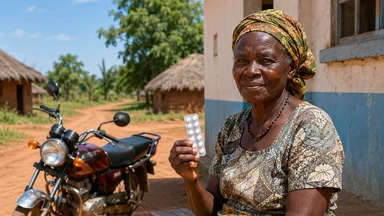
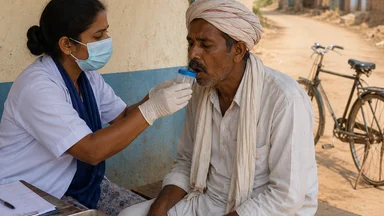
John Ochieng, a 45-year-old farmer in Busia District, began coughing in October 2024. He had night sweats and weight loss. He walked to the nearest health center, where a nurse took a sputum sample and told him to come back in two weeks. When he returned, the sample was still on the shelf. The GeneXpert cartridge stockout had lasted three weeks. The health center had no way to test.
Ochieng borrowed money for a boda boda (motorcycle taxi) to the district hospital, 40 kilometers away. There, the machine was working, but the queue for testing was long. Patients with HIV were given priority; Ochieng, who was HIV-negative, was told to come back the next day. He slept on a bench outside the hospital. The next day, after providing another sputum sample, he was told the result would be ready in a week. It took ten days.
The diagnosis: sputum smear-positive, rifampicin-sensitive tuberculosis. Ochieng had lost six weeks from first symptom to treatment initiation. During that time, he had not worked. He had sold a goat to pay for transport and food. His wife had borrowed from a neighbor. The treatment, a standard six-month regimen of rifampicin and isoniazid, was free, but the costs of getting to the clinic for monthly follow-up—about 20,000 Ugandan shillings (roughly US$5) per visit—added up.
A study published in the journal BMC Public Health in 2023 estimated that tuberculosis patients in Uganda face catastrophic costs—defined as spending more than 20% of annual household income on diagnosis and treatment—in nearly 60% of cases. Diagnosis delays amplify these costs. The longer the patient remains undiagnosed, the more they spend on clinic visits, transport, and lost wages.
For patients with drug-resistant TB, the financial burden is even higher. Treatment lasts 9–18 months, requires monthly injections or daily pills, and often involves hospitalization. The family may have to sell land or livestock to cover costs. And if the diagnosis is delayed, the patient may have already infected others in the household, creating a cascade of illness and expense.
Drug-Resistant TB Spreads While Diagnosis Is Deferred
Delayed diagnosis does not only harm the individual patient. It allows tuberculosis to spread within households and communities. The bacteria are aerosolized when a person with active pulmonary TB coughs, sneezes, or speaks. A single cough can release thousands of bacilli. In a small, poorly ventilated home, exposure is intense.
When the infecting strain is resistant to rifampicin—the most powerful first-line drug—the consequences are dire. Rifampicin-resistant TB (RR-TB) requires treatment with second-line drugs that are less effective, more toxic, and more expensive. The WHO estimates that in 2023, there were 410,000 cases of rifampicin-resistant TB globally, of which 150,000 died.
In Uganda, the National TB Program estimates that roughly 1,500 cases of multidrug-resistant TB (MDR-TB) occur each year. MDR-TB is defined as resistance to at least rifampicin and isoniazid. GeneXpert can detect rifampicin resistance alone, which is a marker for MDR-TB in most settings. But when GeneXpert is unavailable, clinicians must rely on clinical suspicion or smear microscopy, which cannot detect resistance at all.
Without a drug-susceptibility test, patients with drug-resistant TB may be started on a standard first-line regimen that does not work. They remain infectious for longer, and the bacteria may acquire additional resistance. This is a particular risk in rural areas, where access to second-line drugs is limited and patients may default on treatment due to side effects or cost.
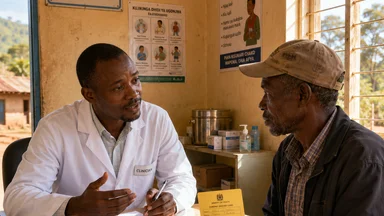
Dr. Grace Mbabazi, a TB specialist at Mulago National Referral Hospital in Kampala, says that she sees patients from rural districts who have been on first-line treatment for months without improvement. "By the time we test them, they have resistance to multiple drugs," she said. "Their treatment becomes much longer, much harder, and much more expensive." The delay in diagnosis, she adds, is the single biggest factor driving poor outcomes.
Cartridge Shortages Reflect Global Procurement Gaps
The root of the problem lies not in Uganda but in the global market for GeneXpert cartridges. Cepheid, a subsidiary of Danaher Corporation, holds the patent for the Xpert MTB/RIF cartridge. The company is the sole manufacturer, and it controls the supply. In 2023, Cepheid produced roughly 30 million Xpert cartridges for all diseases (TB, HIV, HPV, and others), but demand was closer to 40 million.
The Global Fund and PEPFAR are the largest purchasers, buying cartridges in bulk and distributing them to low- and middle-income countries. But the procurement process is complex. Orders are placed months in advance, based on forecasts that may not match real-time demand. When a country like Uganda runs out, it cannot simply order more; it must wait for the next scheduled shipment, which may be weeks or months away.
Shipping delays are common. Cartridges are shipped by air or sea to Mombasa, Kenya, then trucked to Kampala. Customs clearance can take days or weeks. Once inside Uganda, the National Medical Stores distributes them to districts, but the last mile is the hardest. Rural health centers may not have reliable electricity or refrigeration, and cartridges must be stored at 2–28°C. A stockout at the district level means that even if cartridges are available at the central warehouse, they may not reach the patient.
Rationing has become routine. In some districts, clinicians reserve GeneXpert for patients with known HIV infection or those with symptoms of drug-resistant TB. Everyone else is tested by smear microscopy, which has a sensitivity of only about 50% in culture-confirmed TB. "We have to make choices," said Dr. Sam Ouma, a medical officer in Tororo. "We know we are missing cases, but we have no other option."
There is also a financial dimension. The Xpert MTB/RIF cartridge costs roughly US$10–15 per test, which is subsidized by the Global Fund for low-income countries. But the subsidy is not unlimited. In 2024, the Global Fund announced a 10% increase in the price of cartridges, citing rising production costs. For a country like Uganda, which tests roughly 300,000 people for TB each year, that increase adds up to hundreds of thousands of dollars—money that must come from an already strained health budget.
Alternatives Exist but Are Slower or Less Accessible
When GeneXpert is unavailable, clinicians fall back on older, less accurate tests. Sputum smear microscopy, which uses a microscope to look for TB bacteria, can be done at most health centers and costs little. But it detects only about half of all TB cases, and its sensitivity is even lower in children and people with HIV. It cannot detect drug resistance at all.
Culture, the gold standard for TB diagnosis, takes 2–6 weeks to grow the bacteria and requires a well-equipped laboratory with biosafety level 3 facilities. Uganda has only a handful of such labs, mostly in Kampala and a few regional capitals. For a patient in rural Karamoja, sending a sputum sample to Kampala by courier can take a week each way, plus the culture time. The result may arrive after two months.
The urine lipoarabinomannan (LAM) test, which detects a component of the TB cell wall in urine, is fast and cheap, but it is only recommended for people with HIV and a low CD4 count. In HIV-negative patients, the sensitivity is too low to be useful. As of 2024, the WHO had not endorsed its use for general TB screening.
The Truenat platform, developed by the Indian company Molbio Diagnostics, offers an alternative to GeneXpert. It is portable, battery-powered, and uses a different cartridge that is less expensive. The WHO endorsed Truenat for TB diagnosis in 2020. But adoption has been slow. As of late 2024, fewer than 10% of Uganda's diagnostic sites had Truenat machines, and cartridge supply was also inconsistent. "We cannot rely on a single platform," said Dr. Mbabazi. "We need a basket of tests, each suited to a different setting."
What Can Be Done: Local Stockpiles and Decentralized Testing
Some districts have started to build their own buffer stocks of GeneXpert cartridges, ordering extra when supplies are available and storing them for the lean months. But this requires upfront capital that many districts do not have. The National TB Program is exploring a "pull" system in which health centers order cartridges directly from the central warehouse based on real-time usage, rather than receiving fixed allocations. A pilot in six districts reduced stockout rates from 40% to 15% over six months, according to a 2024 program report.
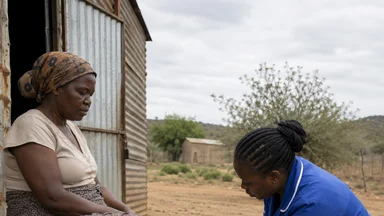
Community health workers (CHWs) are being trained to collect sputum samples at home and courier them to the nearest GeneXpert site. In Busia District, a program supported by the NGO BRAC trained 120 CHWs to identify symptomatic patients, collect sputum, and transport it by bicycle or motorcycle to the district hospital. The program reduced the average time from sample collection to result from 14 days to 4 days, according to a 2023 evaluation.
The National TB Program is also negotiating with Cepheid for a direct supply agreement that would bypass some of the delays in the Global Fund pipeline. Such agreements exist in other countries, including India and South Africa, and have improved the reliability of cartridge supply. But they require a dedicated budget line and a willingness to pay market prices, which Uganda's Ministry of Health has been reluctant to commit to.
Mobile GeneXpert vans, equipped with a machine, a generator, and a stock of cartridges, have been used in some countries, including Zimbabwe and Nigeria, to reach remote areas. Uganda deployed two such vans in 2023, but they covered only a fraction of the country's 134 districts. Scaling up would require funding for vehicles, maintenance, and a reliable supply chain for the vans themselves.
A Fragile System in Need of Resilient Supply Chains
For now, the system in rural Uganda remains fragile. Patients like Esther Nakato and John Ochieng wait, sometimes for months, while their disease progresses and their families are exposed. The GeneXpert machines sit idle, their cartridges stuck in a warehouse in Kampala or on a ship in Mombasa. The clinicians ration what they have, knowing that every test they skip is a case they may miss.
The path forward requires balancing short-term rationing with long-term investment in supply chain resilience. Short-term measures—buffer stocks, community couriers, and mobile vans—can alleviate immediate pressures, but they do not address the underlying monopoly and procurement bottlenecks. Long-term investments in alternative diagnostic platforms, domestic manufacturing capacity, and diversified funding sources are needed to reduce dependence on a single cartridge. However, each of these options involves trade-offs: alternative tests may be slower or less accurate, domestic manufacturing requires years of regulatory and technical development, and diversified funding may require shifting resources from other health priorities.
There are no easy solutions. The global supply of cartridges is constrained by a single manufacturer and a procurement system that was designed for a different era. The alternatives are slower or less accessible. The funding is uncertain. The patients, as always, bear the burden.
But there are glimmers of progress: the buffer stocks, the CHW couriers, the mobile vans. These interventions are small and underfunded, but they show that the system can be improved, even within the constraints. What is needed is not a single breakthrough but a sustained commitment to making the tools that exist available to the people who need them.
As Dr. Ouma put it: "We know what works. The test works. The medicine works. What doesn't work is the supply chain. If we can fix that, we can save thousands of lives."
This article is a news feature and does not provide individual medical guidance. Individuals with symptoms of tuberculosis should seek evaluation from a qualified health professional.