Heart Failure Readmission Costs Push Rural Ugandans to Borrow for Digoxin
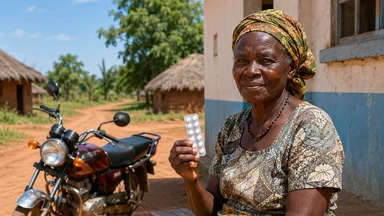
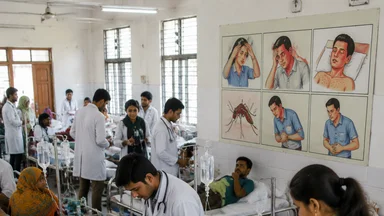
When Grace Nakato, 62, was discharged from Nakasongola Health Centre IV after a week-long stay for acute heart failure, she carried a prescription for digoxin and a warning: miss the daily tablet and she risked swelling, breathlessness, and a return to hospital. Within 48 hours, she was back. The health centre had run out of digoxin; the private pharmacy in town charged the equivalent of two weeks' income from her small vegetable plot. Her son borrowed from a village savings group to buy a strip of tablets, but by then her lungs had already begun to fill with fluid. Nakato’s story is not unusual. Across Uganda, heart failure patients—especially those in rural areas—face a recurring trap: discharge, stock-out, debt, decompensation, readmission. A 2023 study from Makerere University found that over 60% of heart failure patients in rural Uganda had borrowed money to pay for medications within six months of diagnosis. The drug at the center of this cycle is digoxin, a centuries-old cardiac glycoside listed on the World Health Organization’s Essential Medicines List, yet frequently unavailable at public facilities.
The 48-Hour Readmission Trap
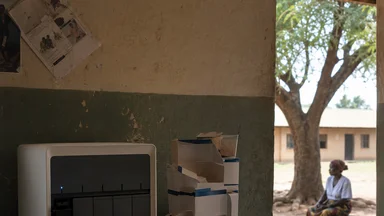
The immediate trigger for Nakato’s readmission was a supply failure. Nakasongola Health Centre IV, the main public facility serving a catchment of roughly 150,000 people, had not received digoxin in three months. “We order from the district, but the stock comes irregularly,” said Sister Grace Among, a nurse at the facility. “Sometimes we get a few bottles, but they go fast.”
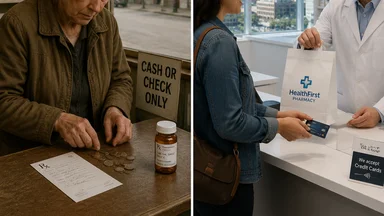
When public supplies run out, patients turn to private pharmacies. In Nakasongola town, a month’s supply of digoxin (0.25 mg tablets) costs about US$5 to $8—a sum that might seem modest but represents a significant outlay for households surviving on less than US$2 per day. For Nakato, who earns roughly US$30 per month from selling tomatoes and greens, the expense consumed nearly a quarter of her income. Transport adds another layer. Nakato’s son hired a boda boda motorcycle to rush her back to the health centre when her breathing worsened. The round trip cost US$3—money he had to borrow from a neighbor. “We had no choice,” he said. “She could not walk.” The health centre has no ambulance; emergency transport is always out-of-pocket.
Once readmitted, Nakato stayed three more days. The hospital provided digoxin during her stay, but upon discharge she faced the same problem: no refill at the facility, and a private pharmacy price she could not afford. Her son took a loan from a village savings and loan association at 10% monthly interest to buy a two-month supply. “I am still paying it back,” he said, four months later.
How Heart Failure Bleeds Households Dry
Heart failure is a chronic condition requiring lifelong medication. For most Ugandan patients, the standard regimen includes digoxin, a diuretic such as furosemide, and sometimes an ACE inhibitor. The monthly cost of these drugs in rural private pharmacies typically ranges from US$5 to $12, depending on availability and brand. But the hidden costs—transport, lost work days, caretaker time—can double or triple the burden. A 2022 survey by the Uganda Non-Communicable Diseases Alliance found that heart failure patients in rural areas spent an average of US$15 per month on direct medical costs and US$8 on transport for follow-up visits. For a household earning US$40 per month, that represents more than half of disposable income. “People sell assets—chickens, goats, even land—to keep up with refills,” said Dr. Sarah Nabukenya, a cardiologist at Mulago Hospital in Kampala. “But eventually, they run out of things to sell.”
Lost labor compounds the problem. Nakato’s son missed three market days during her readmission, losing about US$10 in potential earnings. Her daughter-in-law, who cares for Nakato at home, has stopped selling produce at the local market because she cannot leave her mother-in-law alone. “I used to earn maybe US$2 a day,” she said. “Now nothing.” The financial strain often leads to non-adherence. Patients skip doses to stretch a strip, or stop altogether when money runs out. Within weeks, fluid retention returns, breathlessness worsens, and they end up back in the emergency ward—a cycle that costs the health system more than consistent medication would. A 2021 study at Mulago Hospital estimated that each heart failure readmission costs the facility roughly US$150 in drugs, staff time, and bed occupancy—money that could have kept dozens of patients on digoxin for a month.
Kampala’s Oxygen-Dependent Patients Face Different Math
The picture looks different in Kampala, where patients have access to more options—but still face financial strain. At Mulago Hospital, the national referral facility, digoxin is available at a subsidized price of about US$0.50 per month for registered patients. Yet not everyone qualifies: the subsidy applies only to those enrolled in the hospital’s chronic disease clinic, which has a long waiting list. “We see about 200 new heart failure patients per month, but we can only take 50 into the program,” said Dr. Nabukenya. “The rest have to buy from outside.”
Urban patients also pay for transport—typically US$1–2 per bus ride to Mulago—but they have better access to generic drugs. Private pharmacies in Kampala stock Indian-manufactured digoxin at roughly US$3 per month, less than half the rural price. Some wealthier patients opt for imported beta-blockers like carvedilol, which can cost US$15–30 per month, but these are not essential for all. Private cardiology clinics charge consultation fees of US$10–20, which is prohibitive for most. “Patients come to us after they have tried everything else,” said Dr. James Kigozi, a cardiologist at a private clinic in Kampala. “They may have sold land, taken loans. By the time they see me, they are in debt.”
Still, the urban-rural divide is stark. A patient in Kampala can get a month’s digoxin for under US$1 if enrolled in the subsidy program, while a patient in Nakasongola might pay US$8 and travel 40 kilometers to get it. “The same disease, but the financial toxicity is completely different,” said Dr. Nabukenya.
The WHO Essential Medicines List Gap
Digoxin has been on the WHO Essential Medicines List since 1977, yet its availability in Uganda’s public sector remains erratic. The Uganda National Drug Authority (NDA) reports periodic shortages, often linked to procurement delays and reliance on a single supplier. As of late 2024, all digoxin in Uganda is imported—mostly from India and Kenya—because no local manufacturer produces it. “The market is small, so multinational companies don’t prioritize it,” said an NDA official who spoke on condition of anonymity.
At the district level, health centers typically stock only a handful of drugs: paracetamol, antibiotics like amoxicillin, oral rehydration salts, and sometimes antimalarials. Chronic disease medicines—digoxin, insulin, antihypertensives—are often missing. “We have a list of essential medicines, but the supply chain is weak,” said Dr. Richard Mugisha, a district health officer in central Uganda. “We order, but we don’t always receive.” The consequences are predictable. Patients who cannot find digoxin at public facilities either go without or pay inflated prices at private pharmacies. Some turn to traditional remedies—herbal concoctions that may worsen fluid retention. “We see patients who have been taking local herbs for months, and their heart failure is severe by the time they come to us,” said Dr. Nabukenya.
The WHO’s 2023 report on non-communicable diseases noted that Uganda spends less than 2% of its health budget on NCDs, despite their growing burden. Heart disease now accounts for roughly 10% of hospital admissions in Kampala, yet the drug supply system has not adapted. “We are still organized around infectious diseases,” said Dr. Mugisha. “The chronic disease wave is here, but our system is not ready.”
Borrowing Cycles and Delayed Care
For women like Nakato, borrowing becomes a way of life. She has taken three loans from her village savings group in the past year, each to buy digoxin. “I pay back with interest from my vegetable sales,” she said. “But then I have less money for food, so I get weaker.” The cycle of debt and illness feeds itself: malnutrition worsens heart failure, which requires more medication, which requires more borrowing.
Men face a different pattern. Many migrate to urban centers for seasonal work—loading trucks, building sites—and stop taking medication because they cannot afford refills or lack access to a pharmacy. “They come back to the village sick, and we have to stabilize them,” said a nurse at a health center in Busoga region. “Some never go back to work.”
In Busoga, a nurse-led clinic has tried a novel approach: allowing patients to pay for digoxin in installments. “We keep a ledger,” said Sister Grace Among, the clinic’s head nurse. “They pay US$1 now, US$1 next week. It is not ideal, but it keeps them on treatment.” The clinic also stocks digoxin from a private supplier, bypassing the district supply chain, and sells it at cost—roughly US$0.50 per strip—but that still requires upfront cash.
Non-adherence due to cost leads to acute decompensation, which often requires hospitalization. A 2020 study at Jinja Regional Referral Hospital found that 45% of heart failure readmissions were linked to medication non-adherence, with cost being the primary reason. “If we could subsidize digoxin, we would prevent many of these readmissions,” said Dr. Kigozi.
What a Village Health Team Can Do
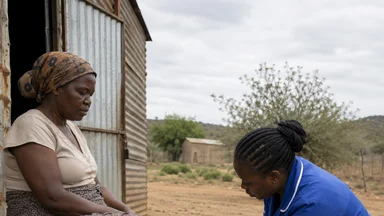
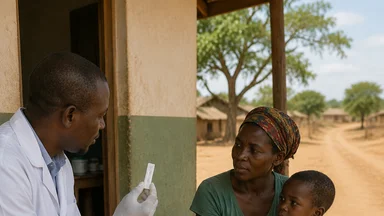
One promising intervention is the use of village health teams (VHTs)—community health workers trained to monitor patients with chronic conditions. In a pilot program in Mukono district, VHTs visit heart failure patients weekly, checking for edema (swelling in the legs) and breathlessness, and reminding them to take their medication. They also collect small payments and deliver digoxin refills to the home, reducing the need for costly travel.
“The VHT is like a bridge,” said Dr. Esther Kirabo, a researcher at Makerere University who evaluated the program. “Patients trust them, and they can catch problems early.” The pilot found that readmission rates fell by roughly 30% among patients enrolled in the VHT program, compared to those receiving standard care. The cost per patient per year was about US$18—mostly for VHT stipends and drug delivery—far less than the cost of a single hospital readmission.
Mobile money has also been tested as a way to pay for refills. In a small study in Mukono, patients could send money via mobile transfer to a central account, and a VHT would deliver the drugs. “It reduced the need to travel to the clinic,” said Dr. Kirabo. “But it requires a phone and network, which not everyone has.”
Scaling these programs faces hurdles. VHTs are already overstretched, often covering multiple diseases—HIV, malaria, maternal health—without additional pay. “Adding heart failure to their workload without compensation is not sustainable,” said Dr. Mugisha. Still, the evidence suggests that community-based models can reduce the financial and clinical burden of heart failure, if properly funded.
Trade-Offs: The Cost of Universal Free Digoxin
While the case for subsidizing digoxin is strong, policymakers must weigh trade-offs. Providing free digoxin to all heart failure patients in Uganda would cost an estimated US$2 million annually—a modest sum compared to the cost of readmissions, but still a significant line item in a health budget that already struggles to cover maternal health, childhood vaccinations, and infectious disease control. “Every shilling we spend on NCDs is a shilling we take from something else,” noted a Ministry of Health official involved in the pilot program, speaking on background. “We have to be honest about the opportunity cost.”
There is also the risk of overburdening the supply chain. Adding a new drug to the public procurement system requires forecasting, storage, and distribution capacity that may not exist. “If we suddenly start buying digoxin for everyone, we might create shortages elsewhere,” said Dr. Mugisha. “We have seen it happen with other medicines.”
Community health workers, too, are a finite resource. VHTs in Uganda already manage HIV, tuberculosis, and malaria, often without pay. Adding heart failure monitoring to their duties—even with a small stipend—could dilute their effectiveness. “We need to be careful not to overload them,” said Dr. Kirabo. “Otherwise, we risk burning out the very people who are keeping the system together.”
Nevertheless, the current approach—where patients pay out-of-pocket—is also costly, both financially and in human terms. “We are spending money on readmissions that could be spent on prevention,” said Dr. Kigozi. “The question is not whether we can afford to subsidize digoxin, but whether we can afford not to.”
Policy Lever: Subsidize Digoxin, Not Just ARVs
The contrast with HIV care is instructive. Antiretroviral drugs are provided free at the point of care in Uganda, funded by international donors and the government. Patients do not pay for refills, and adherence is relatively high. Yet heart failure patients—who have a similarly chronic, life-threatening condition—must pay out-of-pocket for essential medicines. “We have a moral inconsistency,” said Dr. Nabukenya. “We treat HIV as a public good, but heart disease as a private problem.”
Uganda’s non-communicable disease budget remains below 2% of total health spending, according to the Ministry of Health. A 2024 policy brief from the Uganda NCD Alliance recommended waiving the copay for essential NCD medicines—including digoxin—at public facilities. The estimated cost: roughly US$0.50 per patient per month, or about US$2 million annually for the estimated 100,000 heart failure patients in the country. “That is a fraction of what we spend on readmissions,” said Dr. Kigozi.
The Ministry of Health has acknowledged the gap. In 2025, it launched a pilot program to provide essential NCD medicines—digoxin, metformin, and antihypertensives—free at select health centers in four districts. Early results are promising: adherence has improved, and early readmission rates have dropped. But the program is small, and funding beyond the pilot is uncertain. “The political will is there, but the budget is not,” said the Ministry official. “We are competing with other priorities—maternal health, infectious diseases. Heart failure is still invisible.”
Looking Ahead: From Invisibility to Integration
The path forward may lie not in a single silver bullet, but in a combination of targeted subsidies, supply chain reforms, and community-based care. The pilot program in four districts offers a template, but scaling it will require sustained political commitment and donor support. International partners, such as the Global Fund and PEPFAR, have traditionally focused on HIV, TB, and malaria. Expanding their mandate to include NCDs could unlock new resources, but it would also require restructuring existing programs.
At the community level, innovations like VHT-led monitoring and mobile money payments show that low-cost solutions exist. The challenge is to integrate them into the broader health system without overburdening frontline workers. “We need to think of heart failure care as part of primary health care, not a specialty,” said Dr. Mugisha. “That means training general nurses, stocking essential medicines at every health center, and using data to track patients.”
For patients like Grace Nakato, the wait for systemic change is measured in breathless nights and mounting debts. “I pray that my son can keep buying the medicine,” she said. “Without it, I know I will be back in that bed.” Her story is a reminder that behind every policy debate lies a human cost—and that the price of inaction is paid in the most personal currency of all.