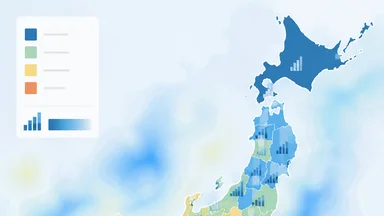
Japan National Cancer Screening Participation Rates Vary by Prefecture Income Quartile
Japan's cancer screening programs are often held up as a model of population-based prevention. National participation rates for gastric, colorectal, and lung cancer screening hover around 60–70%, figures that many other high-income countries envy. But these averages obscure a persistent and troubling pattern: participation varies sharply by prefecture income quartile. In wealthier prefectures like Tokyo, screening coverage can reach 75% or higher, while in lower-income prefectures such as Okinawa, rates often fall below 50%. This gap has consequences—later-stage diagnoses, worse outcomes, and a deepening of health inequities that the national averages simply erase.
A Screening Gap Hidden in the National Averages
Japan's national health insurance system provides universal access to screening for gastric, colorectal, lung, and breast cancers, yet uptake is far from uniform. Data from the Ministry of Health, Labour and Welfare show that in fiscal year 2022, the national participation rate for gastric cancer screening was roughly 58%, for colorectal cancer about 53%, and for lung cancer around 50%. But when those figures are disaggregated by prefecture income quartile—a grouping based on median household income—the spread becomes stark. In the top quartile, participation for gastric screening averages around 70%; in the bottom quartile, it drops to roughly 45%.
The pattern holds across cancer types. For colorectal cancer, the gap between top and bottom quartiles is about 15 percentage points. For lung cancer, it is closer to 20 points. These disparities are not new—studies dating back to the early 2010s noted similar gradients—but they have persisted even as national averages have slowly climbed. The problem is not a lack of awareness; surveys show that knowledge of screening benefits is high across income groups. Rather, the barriers are structural: cost, convenience, and the capacity of local health systems to reach residents.
Prefecture-level data from the National Cancer Center Japan, published in 2024, confirm that the income gradient is not an artifact of urban-rural differences alone. Even after controlling for population density and age structure, prefecture income quartile remains a significant predictor of screening participation. In other words, a low-income prefecture in a rural area has worse participation than a high-income prefecture in a similarly rural setting—but also worse than a low-income urban prefecture. Income itself appears to drive access, not just geography.
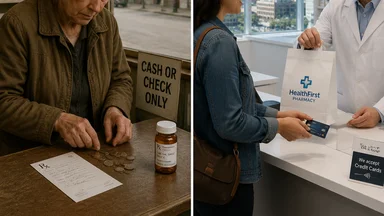
This finding echoes patterns seen in other high-income countries. In the United States, for example, colorectal cancer screening rates are lower in counties with higher poverty rates, even among insured populations. A similar dynamic plays out in Japan, where the national insurance system does not eliminate all financial barriers. Copayments for screening—typically around 1,000–2,000 yen per test—can deter participation in lower-income households, especially when multiplied across multiple family members or multiple cancer types.
Why Prefecture Income Quartile Predicts Participation
Several mechanisms link prefecture income to screening uptake. First, municipal governments administer screening programs with limited central funding. Wealthier prefectures can supplement national subsidies with local tax revenue, allowing them to reduce or waive copayments, send reminder letters, and operate dedicated screening centers. Lower-income prefectures often struggle to fund these extras, relying on minimal outreach and requiring residents to visit clinics during work hours.
Second, employment-based insurance covers a large share of the population, but it excludes irregular and part-time workers—a group more common in lower-income prefectures. These workers must rely on municipal screening, which may be less convenient or have longer wait times. For those in stable employment, workplace-based screening is often free and scheduled during work hours, removing both cost and time barriers.
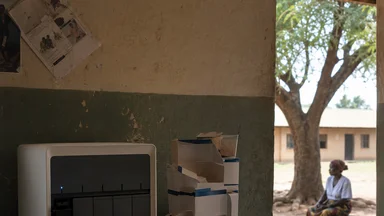
Third, geography and transport access widen the divide in rural prefectures. Many lower-income prefectures are also rural, with fewer screening facilities per capita. A resident of a remote village in Aomori may need to travel an hour or more to reach a clinic offering endoscopy or CT scanning. For a low-income household without a car, that trip may be impractical. Wealthier urban prefectures, by contrast, have screening centers within walking distance or a short bus ride.
Fourth, health literacy and language barriers play a role, especially among older residents and immigrant populations. Lower-income prefectures tend to have higher proportions of residents with limited formal education, and screening materials are often written in technical Japanese. A 2021 study in the journal Health Literacy Research and Practice found that individuals with low health literacy were 30% less likely to participate in cancer screening, even after adjusting for income and insurance status. This suggests that simplifying communication and using visual aids could help narrow the gap.
Finally, lower-income prefectures tend to have higher rates of smoking and other risk factors, which might be expected to increase demand for screening. Yet the opposite occurs: those at highest risk often have the lowest participation. This paradox suggests that the barriers to screening—cost, convenience, awareness—outweigh the perceived benefit, even among those who know they are at elevated risk.
The Gastric Cancer Screening Program as a Case Study
Gastric cancer remains a leading cause of cancer death in Japan, and the national screening program—based on upper endoscopy or barium X-ray—has been a cornerstone of prevention since the 1960s. In 2016, the Ministry of Health recommended endoscopy as the primary method for high-risk groups, a shift that improved detection rates but also increased costs. Participation in top-quartile prefectures now hovers around 70%, while bottom-quartile prefectures report rates nearer 45%.
A 2019 study from Tohoku University examined the consequences of this gap. Researchers compared stage at diagnosis in prefectures with high versus low screening participation and found that low-participation prefectures had a significantly higher proportion of stage III and IV gastric cancers at diagnosis. The authors estimated that closing the participation gap by 20 percentage points could reduce late-stage diagnoses by roughly 15% over five years.
One promising intervention came from Kyoto Prefecture, which introduced a coupon program for low-income residents in 2018. Eligible households received a voucher covering the full cost of endoscopy (normally around 5,000 yen). Over two years, participation among the targeted group rose by 12 percentage points, nearly closing the gap with higher-income residents. However, the effect was smaller among those who had never been screened before, suggesting that cost is not the only barrier.
Critics point out that coupon programs are expensive to administer and may not be sustainable without central government funding. Kyoto's program was funded by a temporary prefectural surplus; replicating it nationwide would require a significant budget allocation. Nevertheless, the results demonstrate that targeted financial incentives can reduce disparities, at least in the short term.
Colorectal and Lung: Similar Patterns, Different Barriers
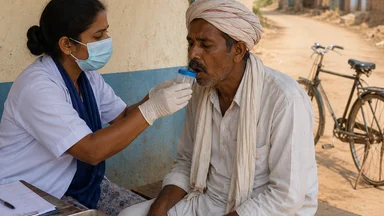
Colorectal cancer screening in Japan relies primarily on the fecal immunochemical test (FIT), which can be mailed to homes and returned by post. In high-income prefectures, this approach has achieved participation rates of 60–65%. In lower-income prefectures, the rate is closer to 45–50%. The gap is narrower than for gastric screening, partly because FIT is simpler and cheaper. But the pattern persists, and evidence suggests that the mode of distribution matters.
In wealthier areas, municipalities often mail FIT kits directly to residents along with prepaid return envelopes. In lower-income areas, residents may need to pick up kits at a clinic or health center, adding an extra step that reduces uptake. A 2022 study in Okayama found that switching from clinic-based distribution to mailed kits increased participation by 18% in low-income neighborhoods, but the change required upfront investment in mailing and tracking systems.
Lung cancer screening presents a starker picture. Low-dose CT screening is recommended for high-risk groups (smokers aged 50 and over), but participation in Tokyo reaches about 60%, while in Aomori it is roughly 38%. Smoking rates are higher in lower-income prefectures, compounding the disparity: those most in need of screening are least likely to receive it. Barriers include limited availability of CT scanners in rural areas, lack of referral pathways, and copayments that can reach 3,000–5,000 yen per scan.
Program design—not just awareness—drives the gap. In high-income prefectures, screening is often bundled with other health checkups or offered at workplaces. In low-income areas, residents must schedule separate appointments, often during work hours, and may face language or literacy barriers if materials are not tailored. The result is a system that, despite universal coverage, reproduces existing social inequalities.
Policy Experiments That Narrowed the Divide
Several prefectures have tested interventions to close the screening gap. Kyoto's coupon program for gastric endoscopy has already been mentioned. Fukuoka Prefecture launched mobile screening vans for lung cancer CT in 2020, targeting rural districts with limited access to fixed scanners. Within three years, the vans increased screening reach by about 20% in the targeted areas, and the program was expanded to cover colorectal FIT collection as well.
Hokkaido's approach focused on reducing the opportunity cost of screening. The prefecture introduced "bundled screening days" on weekends, offering multiple cancer tests at a single visit. This cut the number of trips required and reduced missed work time. Participation in bundled events was 25% higher than in standard weekday appointments, and the effect was largest among low-income residents who could not afford to take time off.
Another innovative program came from Shiga Prefecture, which partnered with local convenience stores to distribute FIT kits. Residents could pick up a kit at a participating store, complete the test at home, and drop it off at the same store. The program, launched in 2021, increased participation in low-income neighborhoods by about 15% within the first year. However, concerns about privacy and kit handling led to some pushback, and the program required training for store staff.
These experiments share common features: they reduce financial or logistical barriers, target low-income populations specifically, and are evaluated with prefecture-level data. Yet they also have limitations. Coupons raised uptake but did not improve completion rates for follow-up after a positive screen. Mobile vans increased first-time screening but struggled with retention. Bundled days required coordination across multiple departments and were not sustainable without dedicated funding. Convenience store distribution raised logistical and privacy issues that may not be scalable nationwide.
The central government's 2025 reform package includes a proposal to cap copayments for cancer screening at 1,000 yen per test for low-income residents, funded by a national subsidy. If implemented, this could reduce the financial barrier across all prefectures. But critics argue that copayment caps alone will not solve the logistical and educational barriers that keep participation low in poorer areas. The reform also includes funding for mobile units and mailed FIT kits, but the allocation formula favors prefectures with higher baseline participation, potentially widening the gap.
What the Data Mean for Clinicians and Public Health Planners
For clinicians practicing in low-income prefectures, the message is sobering: patients are likely to present with more advanced cancers than their counterparts in wealthier areas. A 2023 study in the Japanese Journal of Clinical Oncology found that the proportion of stage III or IV colorectal cancer at diagnosis was 12% higher in prefectures in the lowest income quartile compared to the highest. This translates to worse survival and higher treatment costs, placing additional strain on local healthcare budgets.
Public health planners, meanwhile, face a choice. National averages may satisfy reporting requirements, but they mask the equity failures that undermine the program's effectiveness. Tracking participation by prefecture income quartile—and by smaller geographic units, such as municipality or census tract—is essential for identifying where interventions are needed. Some prefectures have begun to do this, but there is no national mandate to report disaggregated data.
Income quartile is a proxy—but a powerful one—for a cluster of barriers: cost, convenience, employment status, and health literacy. Interventions that address only one of these barriers may have limited impact. The most successful programs combine financial subsidies with logistical support, such as mailed kits, mobile units, and weekend hours. They also engage community health workers to reach populations that do not respond to mailed reminders.
A counter-argument worth considering is that focusing on income quartile may overstate the role of income relative to other factors, such as age or comorbidities. Some researchers argue that age is a stronger predictor of screening participation than income, and that interventions should target older adults regardless of income. However, the data show that income remains significant even after adjusting for age. Moreover, older adults in low-income prefectures face compounding disadvantages—they are both less likely to have been screened historically and more likely to have limited mobility or social support.
Without granular tracking and sustained investment, disparities will persist. The 2025 reform is a step in the right direction, but it remains to be seen whether it will be implemented with enough flexibility to allow prefectures to tailor solutions to their local contexts. For now, the gap in screening participation by prefecture income quartile remains a quiet but consequential failure of Japan's otherwise admirable cancer control program.
This article is for informational purposes only and does not constitute medical advice. Readers should consult their healthcare provider for personal screening recommendations.